
Method

Four steps that repeat. First the problem, then the solution, then execution with AI and people who know their craft – and then numbers that tell us whether it worked.

1Analysis2Solution3Execution4Measure & adjust

1 / 4

Analysis

What is the actual problem – and what is just a symptom? Numbers, conversations, an honest look at what has been done so far.

A clear diagnosis on two pages.

Why a cycle and not a list

Most marketing projects don’t fail on the idea. They fail because nobody looks after the launch. The campaign runs, the report arrives, nobody reads it, same again next year.

So step four doesn’t end with me – it leads back to step one: what did the numbers show? What is the problem now? Sounds trivial, but it’s the difference between marketing that costs money and marketing that makes it.

1

Analysis

What is the actual problem?

I don’t start with channels or tools, I start with questions. What should be different in six months? Who decides on the customer side, and what makes them decide? What has been tried, and why wasn’t it enough?

Plus: the numbers that already exist (website, social, CRM, sales), conversations with the people who deal with customers every day, and an honest outside look at brand, presence and competition.
What I need from you

  • Two to three hours for conversations
  • Access to the numbers you have
  • Honesty about what hasn’t worked so far

What you end up with

  • A diagnosis on two pages: problem, causes, levers
  • A first view of what is realistic

AI and network

AI for market and competitor research, analysis of reviews and social comments, first data analysis. The conversations I do myself.

2

Solution

The shortest route, not the prettiest.

A proposal that fits your company, not my portfolio. With priorities: what first, what later, what deliberately not. With effort and timeline. And with the KPIs we’ll measure against – agreed up front, not fitted afterwards.

Sometimes the solution is a new brand identity. Often it’s smaller: a better landing page, a different offer, a sales process that finally follows up on leads. I’ll also tell you when marketing isn’t the problem.

What I need from you

  • A decision
  • A budget range
  • Someone on your side who signs things off

What you end up with

  • A plan with priorities, time, cost and KPIs
  • Clear roles: who does what

AI and network

AI for variants, scenarios, first drafts. Specialists from the network when it comes to branding, media planning or technology beyond my own craft.

3

Execution

Finished things, not concepts.

I build – myself or with people who do it better than me. Art directors, filmmakers, developers, copywriters, media planners, in Germany and internationally. You have one point of contact; I coordinate.

AI where it saves time and money: research, rough drafts, variants, translations, edit prep, reporting. People where it has to look and feel real: concept, film, photography, the last twenty percent of a text.

What I need from you

  • Approvals, promptly
  • Access to people and material
  • Trust that not every line needs a workshop

What you end up with

  • Website, campaign, content, process – live
  • Documentation so it runs without me

AI and network

Claude, ChatGPT, Gemini, Firefly, Midjourney, Runway and whatever is better right now. Network as needed, billed transparently.

4

Measure & adjust

Numbers you understand.

The KPIs from step two, measured regularly and reported in plain language: what cost what, what brought what, what we do differently. Not a 40-page dashboard – one page with the five numbers that count.

What works gets scaled. What doesn’t gets cut – even if it was my idea. And then back to step one: what is the problem now?

What I need from you

  • Thirty minutes a month
  • The willingness to stop things that aren’t working

What you end up with

  • Monthly one-page report
  • Decisions, not just numbers

AI and network

AI for data preparation, anomaly detection, reporting. The conclusions are mine.

AI wherever possible – with experience in front and behind

I use AI everywhere it is faster or better than the old way: research, analysis, drafts, variants, translations, image ideas, reporting. The difference to “just ask ChatGPT” lies in two places.

In front: the prompt. After thirty years in marketing I know what a good brief contains – audience, tone, format, examples, exclusions. The AI gets that just like a copywriter or art director used to. That is why the first result is already usable, not the tenth.

Behind: review in layers. A second model checks the output of the first – facts, logic, tone, gaps. That becomes an improved version, which goes through the loop again until nothing improves any more. Only then do I look at it myself. What goes out has been through several AI layers and one human who knows how it lands in the real market.

1Brief & prompt2AI drafts3Second AI reviews4Improve5Human checksExperiencein and out
The AI loop. Experience sits in the prompt and in the final check. In between, the models run in loops.

And for everything else: people I have known for years

There are things AI can’t do and I don’t do well enough: design a brand identity from scratch, shoot a film, build a platform, plan a media campaign across six countries. For that I have a network of specialists built over three decades in agencies and projects – in Germany, the US, Eastern Europe, Scandinavia.

You don’t get “the agency”, you get exactly the two or three people your project needs. I brief them, I coordinate, I remain your point of contact. Billing is transparent, with no mark-up on third-party work.

AI modelsArt directorFilm & photoDevelopmentCopyMediaBrandingLegalChris
Who is involved. One point of contact. Behind it, tools and people depending on the task.

What works today: real beats glossy

For social media, paid social and websites one simple rule applies right now: the more it looks like advertising, the faster people scroll past. The perfectly lit picture with a model in front of the camera is still needed for the TV spot. Online, the real thing wins – the employee explaining what they do; the phone video from the set; the photo where not everything is in place.

Small mistakes and imperfections read as true. That is not an excuse for sloppiness but a production principle: faster, cheaper, closer – and with content that speaks the language of the platform, not the language of the brochure. I’d rather produce twenty real clips than one perfect one.

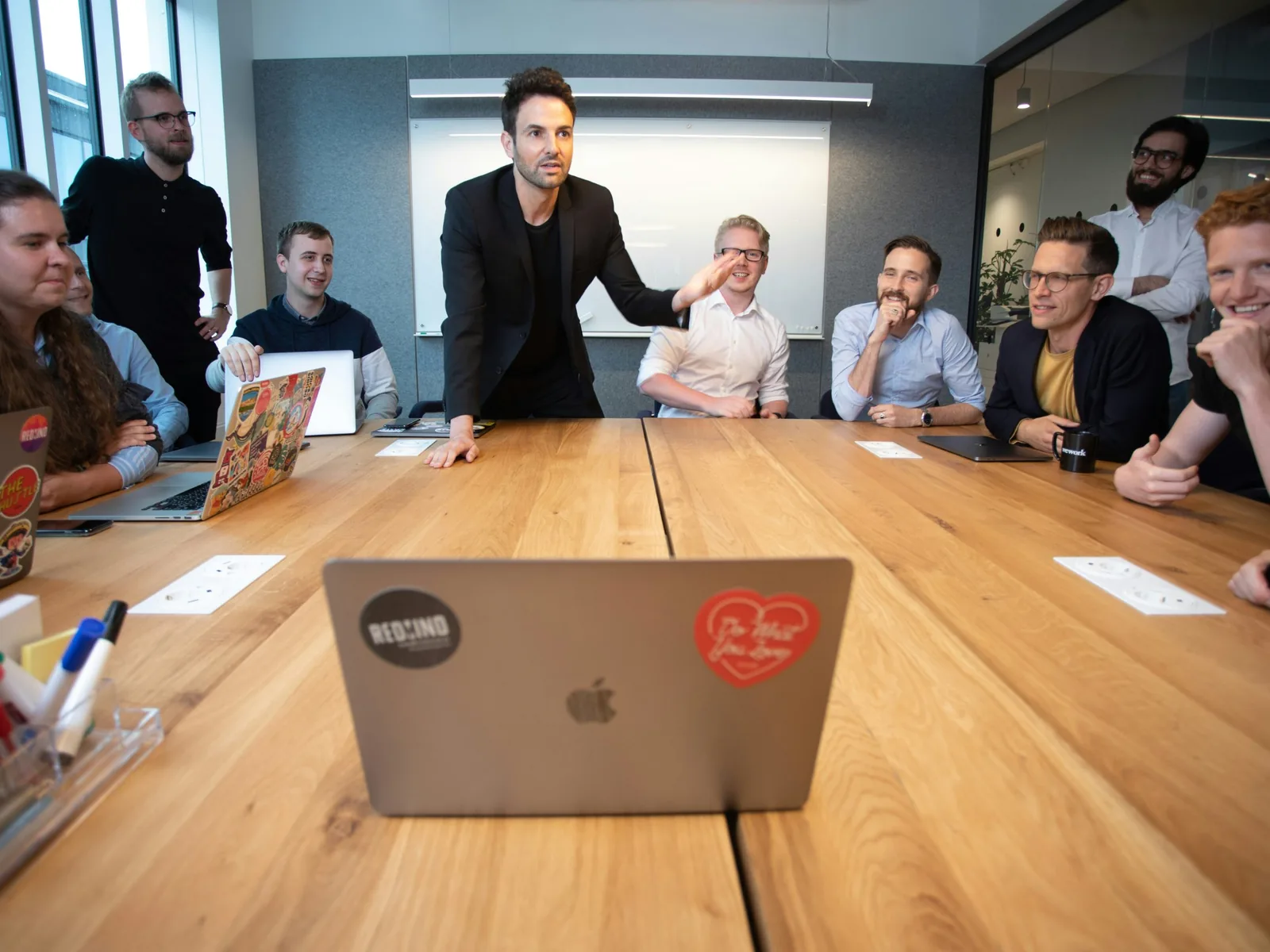
Working session at the table: a team discussing a project

How you’ll recognise me

  • Problem before tool

    I don’t sell AI or social media. I sell the solution to a problem – and use whatever works.

  • Two pages instead of sixty slides

    If I can’t explain it briefly, I haven’t understood it.

  • Agree the measures up front

    KPIs are in the plan before the first euro is spent.

  • Say so when it doesn’t fit

    Sometimes marketing isn’t the problem. Then I say so, even if it costs me the job.

  • Runs without me

    What I build, I document so your team can take it over.

Step one takes one conversation.

Tell me where it’s stuck. Within 24 hours I’ll tell you whether and how I can help.

Get in touch